Relationships are hard. Even harder when they’re with a prostitute. Add a soldier to the mix who suddenly discovers that he’s gay and it seems that relationships are damn near impossible. Such is one of the many premises running rampant through Joe DiPietro’s play F*cking Men.
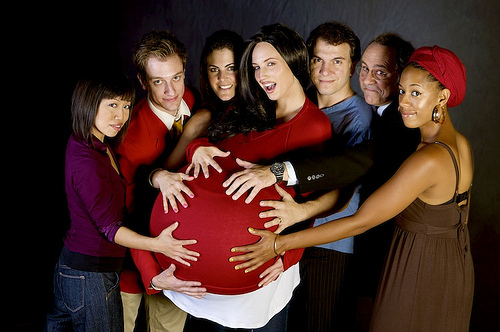
In the heart of West Hollywood at the Celebration theatre known for its gay, lesbian, and transgender productions, men roam wild and free on the stage. Focused around 10 gay men living in urban America (even though the play was originally for the British stage) F*cking Men brings to light issues we all face in our relationships, whether, gay, straight or completely asexual. Is monogamy natural? Is it necessary? Is promiscuity the answer?
Written for the Stages of London, Joe DiPietro brings together men from all different backgrounds: a soldier, a prostitute, a grad student, a college kid, a high school teacher, a banker, a porn star, a playwright, a movie star, and a talk show host. While many may find the graphic dialogue, sexual depictions and naked men who float in and out of the scenes hard to stomach, the way in which it is presented is so well done that it seems almost natural to see so many penises on the stage.

When you go to watch a performance at the Getty Villa, you don’t expect to see a mountain of garbage in the center of the stage, nor have the play opened by a man dressed in a mariachi costume with a giant foam Dodgers finger on one hand. Performances of Greek comedies are not usually filled with scatological humor or rapid-fire sexual innuendos that would make even the Bard blush. However, this is exactly the kind of experience the theater group 

To begin, a small rant:
The play had started twenty minutes prior, and I had a weird feeling of unease. The house, stuffy from the stage fog, clouded my mind, and put the explanation just out of reach.
Jesus. I’m lost.
Sam Shepard, a product of the Yale School of Drama and Pulitzer Prize winning playwright, is one weird mother. Often, you are hard pressed to figure out whether his statements are as odd or otherwise anachronistic as they appear — or just merely ironic. The play is a tough one, dealing with the dark side of fame, the inescapability of fate, the heredity of madness. Do you need to kill yourself to live? Could you stop yourself?